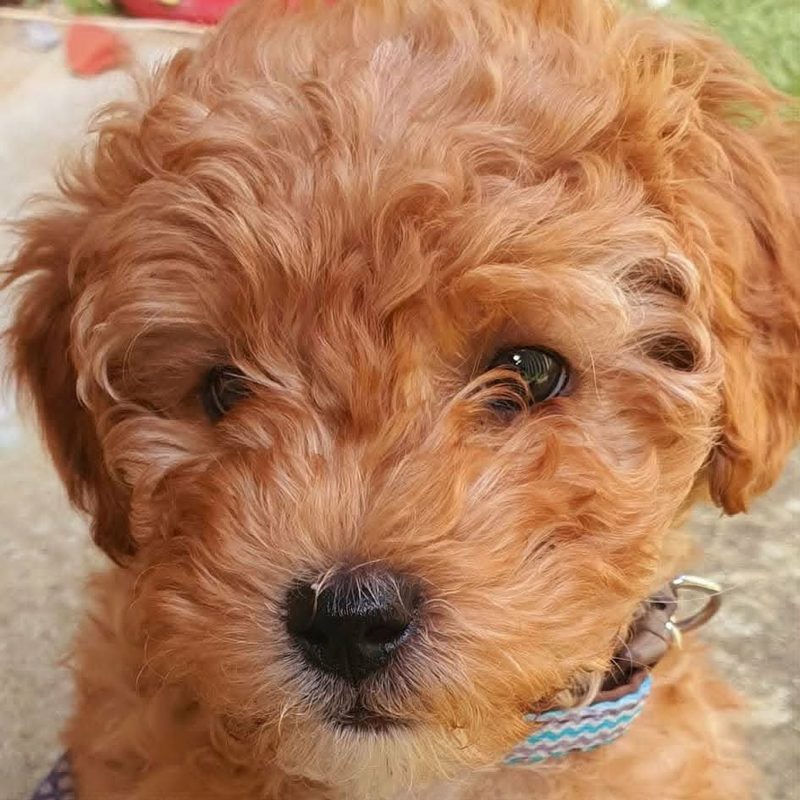
If you've been browsing Cavoodle puppies for sale, you've likely seen litters labelled F1 or F1B. Here's what those terms actually mean.
F1 Cavoodle: The First Cross
An F1 Cavoodle results from crossing a purebred Poodle with a purebred Cavalier King Charles Spaniel - roughly a 50/50 genetic split. F1 litters often show more coat variation between littermates, from looser waves to tighter curls.
F1B Cavoodle: The Backcross
An F1B Cavoodle comes from crossing an F1 Cavoodle back to a purebred Poodle, increasing the Poodle genetic contribution to roughly 75%. This typically produces a denser, curlier, lower-shedding coat, and slightly more coat consistency within a litter.
Which Sheds Less?
Generally, F1B Cavoodles shed the least and are often preferred by households managing mild allergies, thanks to the stronger Poodle coat influence. That said, individual variation still exists - two puppies from the same F1B litter can carry slightly different coat textures.
Does Generation Affect Temperament or Health?
Generation primarily affects coat type and shedding, not temperament, which is shaped more by individual genetics, early socialisation and upbringing. Health outcomes depend far more on the health testing and screening of the parent dogs than on F1 versus F1B status specifically.
Which Should You Choose?
If minimising shedding is a top priority (particularly for allergy-sensitive households), an F1B puppy is often the safer choice. If coat type matters less to you, an F1 Cavoodle offers the same loving temperament at what is sometimes a slightly lower price point. Each puppy's generation is listed clearly on their individual profile page.